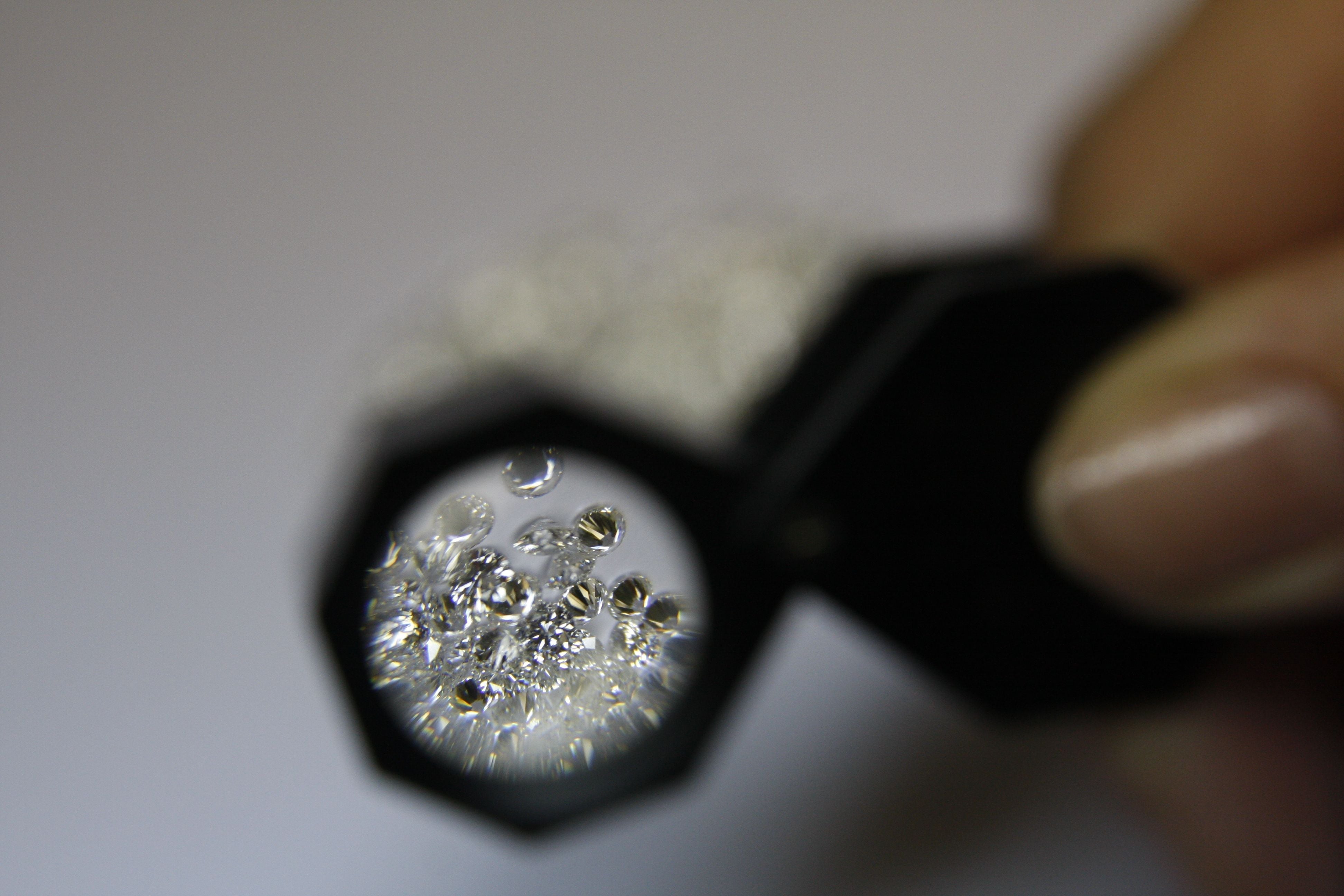
If you've been researching engagement rings for more than an hour, you've almost certainly come across lab grown diamonds — and then immediately wondered: are they actually worth it?
It's a fair question. Lab grown diamonds are sold at dramatically lower prices than mined diamonds, which can make buyers nervous. Lower price usually signals lower quality. But with lab grown diamonds, that assumption doesn't hold — and understanding why is the key to making a confident decision.
The short answer: yes, lab grown diamonds are worth buying in 2026 — for most people shopping for an engagement ring. But "worth it" depends on what you value, and this guide walks through all of it honestly.
Why Are Lab Grown Diamonds So Much Cheaper?
The price difference between lab grown and mined diamonds is the first thing that raises eyebrows, so it's the right place to start.
Lab grown diamonds cost 50%–70% less than comparable mined diamonds. That gap is real, significant, and has actually widened over the past few years. The reason has nothing to do with quality — it comes down to supply and production costs.
Natural diamonds are rare. They form over billions of years, exist in limited quantities, and require expensive, large-scale mining operations to extract. That scarcity and cost of production drives the price up.
Lab grown diamonds are created in weeks using technology that has improved rapidly. As production processes have become more efficient and more producers have entered the market, the cost to create a lab grown diamond has fallen significantly. That cost reduction is passed on in the price.
Critically: the lower price does not mean lower quality. A lab grown diamond is graded by the same independent laboratories (IGI, GIA) using the same standards as mined diamonds. A lab grown diamond with excellent cut, G color, and VS2 clarity is genuinely an excellent-cut, G-color, VS2-clarity diamond — the grades are real and verified.
The lower price reflects a different origin and a more abundant supply. That's it.
What Do You Actually Get for the Money?
This is where lab grown diamonds make their most compelling case.
Because lab grown diamonds cost so much less per carat, the same budget buys you a dramatically better stone — or the same stone for dramatically less money. Here's what that looks like in practice:
| Budget | Natural Diamond | Lab Grown Diamond |
|---|---|---|
| $1,500 | ~0.40ct, good cut | ~1ct–1.2ct, excellent cut |
| $3,000 | ~0.75ct, excellent cut | ~2ct–2.5ct, excellent cut |
| $5,000 | ~1ct–1.2ct, excellent cut | ~3ct–3.5ct, excellent cut |
| $8,000 | ~1.5ct, excellent cut | ~4ct+, excellent cut |
These are approximate figures for G–H color, VS2–SI1 clarity stones in an excellent cut grade. Actual prices vary by shape and specific grades, but the ratio holds: you get roughly two to three times more diamond for the same money.
For most engagement ring buyers, this is the single most persuasive argument for lab grown diamonds. The ring your partner will wear every day will look more impressive — because it is more impressive, in terms of stone size and quality — for the same or less money.
If you're still working through your budget, our guide on how much to spend on an engagement ring walks through a practical framework.
Are Lab Grown Diamonds Real Enough to Feel Special?
This is the emotional question underneath the practical one — and it deserves a direct answer.
Lab grown diamonds are chemically and physically identical to mined diamonds. The stone in your ring will sparkle the same way, feel the same weight, and look the same in every photograph and every moment of daily life. There is no asterisk on the diamond itself.
What's different is the story of where it came from. A mined diamond has a geological origin spanning billions of years — something some people find deeply meaningful. A lab grown diamond was created in weeks in a controlled environment. That origin story is different, and for some buyers it matters.
But here's what we've consistently found: when couples understand that a lab grown diamond is a real diamond — not a simulant, not a substitute — and when they see what that budget allows them to get, the emotional attachment to natural origin often fades. The ring is real. The diamond is real. The moment is real. The origin is just the origin.
Many couples also find a new kind of meaning in the lab grown choice: an intentional decision to prioritize value, ethics, and their financial future over a tradition that was, in large part, invented by a marketing campaign.
The Honest Case Against Lab Grown Diamonds
A fair guide has to cover both sides. Here's where lab grown diamonds genuinely fall short:
Resale Value Is Lower — and Declining
This is real, and it's the strongest argument against lab grown diamonds as a purchase decision.
As lab grown diamond production costs have dropped, the resale market for them has weakened significantly. A lab grown diamond purchased today will likely sell for substantially less than its purchase price if you try to resell it — and that gap may widen over time as production costs continue to fall.
Natural diamonds also have poor resale value compared to retail price (most sell at 20%–50% of what was paid), but the secondary market for mined diamonds is more established and the floor is higher.
If there's a genuine chance you'll want to sell or trade in the diamond in the future, this matters. If you're buying a ring to keep and wear for a lifetime — as most people do — it matters much less.
The Natural Origin Story Is Gone
Some people genuinely value the idea that their diamond is billions of years old, formed by natural geological forces, and truly one of a kind. That's not a marketing story — it's real, and it carries meaning for some buyers. Lab grown diamonds cannot offer that, and it's honest to acknowledge it.
Not Every Jeweler Stocks Them Well
This is less of a product issue and more of a shopping issue: not every jeweler has invested in quality lab grown diamond inventory with proper certification. Buying an uncertified lab grown diamond from an unknown source is not recommended. Always insist on an IGI or GIA certificate.
Are Lab Grown Diamonds Worth It for an Engagement Ring Specifically?
Engagement rings are the most common use case for lab grown diamonds, and they're also where the value proposition is strongest. Here's why:
- The ring is worn daily. An engagement ring isn't stored in a safe or sold at auction — it's worn every day for decades. The resale value argument matters much less for something that stays on your partner's finger.
- Size and quality are visible. The center stone is the most prominent feature of most engagement rings. Getting a 2ct stone instead of a 0.75ct stone at the same price creates a ring that looks genuinely more beautiful — and that difference is visible to everyone who sees it.
- The money saved is real money. $3,000–$5,000 is a meaningful sum. For many couples, that difference goes toward a honeymoon, a home, or starting a life together. That's a real trade-off worth taking seriously.
- Lab grown diamonds are growing in popularity. As more couples choose lab grown diamonds, the stigma that sometimes attached to them early on has largely disappeared. They're mainstream now, not a compromise.
What to Look for When Buying a Lab Grown Diamond
If you decide a lab grown diamond is right for you, here's what to prioritize:
Always Buy Certified
Every lab grown diamond should come with a certificate from IGI (International Gemological Institute) or GIA (Gemological Institute of America). The certificate is your independent verification of the stone's exact specifications. Without it, you have only the seller's word. Every lab grown diamond ring at Anjays Designs includes an IGI certificate.
Prioritize Cut Above All Else
Cut is the single most important factor in how beautiful a diamond looks. An excellent or ideal cut grade maximizes light return, brilliance, and fire. Don't compromise on cut to save money — a poorly cut 2ct diamond will look less impressive than a well-cut 1ct diamond.
G–H Color Is the Sweet Spot
Color grades D–F are "colorless" and carry a premium. G and H grades are "near colorless" — indistinguishable from D–F to the naked eye in most settings — and cost meaningfully less. This is where most experienced buyers land.
VS2 or SI1 Clarity Is Sufficient for Most Buyers
Inclusions in VS2 and SI1 stones are not visible without magnification. "Eye clean" is the practical standard for engagement rings. VVS and Flawless grades carry a significant price premium for clarity differences that are invisible in everyday wear.
Choose a Reputable Jeweler
Buy from a jeweler who specializes in lab grown diamonds, provides full certification, has clear return and warranty policies, and can answer detailed questions about their stones and settings.
Browse our IGI-certified lab grown diamond rings →
Lab Grown Diamond Styles at Anjays Designs
At Anjays Designs, every engagement ring is handmade in solid 14K or 18K gold and set with IGI-certified lab grown diamonds. We specialize in designs with character — rings that are distinctly beautiful, not interchangeable with every other jewelry store.
- Solitaire rings: Timeless, clean, and designed to let the diamond speak for itself.
- Nature-inspired rings: Floral, leaf, and botanical settings that frame a lab grown diamond in something truly unique.
- Celtic rings: Knotwork and heritage designs for buyers who want a ring with deep symbolism.
- Wedding bands: Matching and coordinating bands to complete the set.
Frequently Asked Questions
Will a lab grown diamond lose its sparkle over time?
No. Lab grown diamonds have the same chemical stability as natural diamonds. They do not degrade, cloud, or lose brilliance over time. The only thing that dulls a diamond's sparkle is surface buildup from lotions, soaps, and oils — which is easily cleaned with warm water and a soft brush. A lab grown diamond cleaned and maintained properly will look as beautiful in 30 years as it does today.
Is it embarrassing to buy a lab grown diamond engagement ring?
Not at all — and this perception has shifted dramatically in recent years. Lab grown diamonds are now mainstream in the engagement ring market, chosen by a growing percentage of couples every year. Many buyers actively prefer them for value and ethical reasons. The stigma that existed five years ago has largely disappeared.
Can I upgrade a lab grown diamond later?
Many jewelers, including Anjays Designs, offer stone upgrade options. You can often trade in the original stone and apply its value toward a larger or higher-quality lab grown diamond in the future. Check with your jeweler about their specific upgrade policy before purchasing.
Are lab grown diamonds good for the environment?
Lab grown diamonds eliminate the need for mining, which means no land disruption, no ecosystem impact, and no risk of conflict sourcing. They do require significant energy to produce — and the environmental benefit depends in part on whether that energy is renewable. Overall, most environmental analyses consider lab grown diamonds to have a lower footprint than mined diamonds, though it's not a zero-impact process.
Do lab grown diamonds pass a diamond tester?
Yes. Standard thermal conductivity diamond testers cannot distinguish lab grown diamonds from natural diamonds, because both are real diamonds. Some advanced screening tools used by gemological laboratories can identify lab grown origin, but these are specialized instruments not used in everyday jewelry retail.
What is the best lab grown diamond cut for an engagement ring?
The round brilliant is the most popular cut for engagement rings and maximizes brilliance in both lab grown and natural diamonds. Oval cuts are currently very popular and tend to look larger than a round of the same carat weight due to their elongated shape. Cushion and pear cuts are also beautiful choices. For all shapes, prioritize an excellent or ideal cut grade over all other factors.
The Verdict: Are Lab Grown Diamonds Worth It in 2025?
For most couples shopping for an engagement ring today, yes — lab grown diamonds are absolutely worth buying.
They are real diamonds in every meaningful sense. They look identical to mined diamonds. They are graded and certified by the same independent laboratories. They are durable enough to last a lifetime of daily wear. And they cost 50%–70% less, which means your budget goes significantly further.
The trade-offs are real: lower resale value and no natural geological origin story. If either of those things matters deeply to you, a natural diamond may be the right choice. But for buyers who care most about the beauty of the ring, the quality of the stone, and what their budget can actually achieve — lab grown diamonds deliver exceptional value in 2025.
Ready to see what your budget gets you? Browse our full collection of lab grown diamond engagement rings, or contact us with any questions — we're happy to help you find the right stone.